|
Thrust roller bearing

Collect
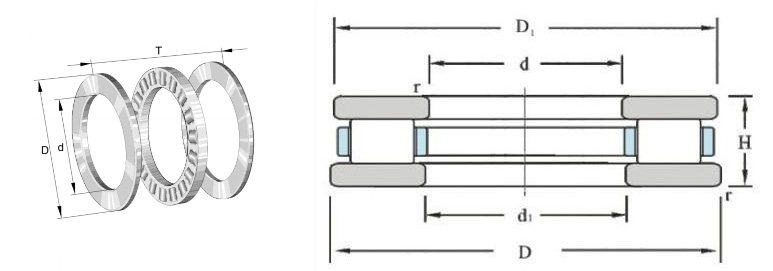
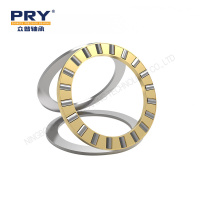
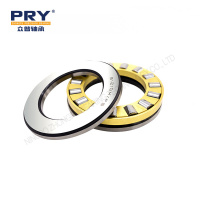
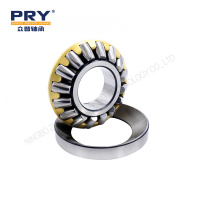
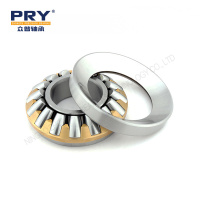
Thrust roller bearings are used to withstand axial and radial combined loads, but the radial load shall not exceed 55% of the axial load. Compared with other thrust roller bearings, this type of bearing has a lower friction coefficient, higher rotational speed, and has centering performance. The roller of the bearing is an asymmetric spherical roller, which can reduce the relative sliding of the roller and raceway during operation. The roller is long, has a large diameter, has a large number of rollers, and has a high load capacity. Oil lubrication is usually used, and grease lubrication can be used in some low-speed situations. When designing and selecting models, priority should be given to selection; Thrust cylindrical roller bearings and thrust tapered roller bearings are suitable for low speed situations, with thrust tapered roller bearings having slightly higher speeds than thrust cylindrical roller bearings. Thrust cylindrical roller bearings are separable bearings that can only withstand unidirectional axial loads and slight impacts, and can limit the axial displacement of the shaft (or shell) in one direction. Therefore, they can be used for unidirectional axial positioning. But its load-bearing capacity is far greater than that of thrust ball bearings. When rolling, due to the different linear speeds at both ends of the roller, sliding of the roller on the ring raceway is inevitable. Therefore, the limit speed of this type of bearing is lower than that of thrust ball bearings, and it is usually only suitable for low-speed operation situations. The standard designed thrust cylindrical roller bearing adopts a metal solid cage made by car. According to user requirements, other types or materials of cages can also be used. Thrust tapered roller bearings can only withstand unidirectional axial loads and can limit the bearing's unidirectional axial displacement, so they can be used for unidirectional axial positioning. Compared with thrust cylindrical roller bearings, they have larger load-bearing capacity and smaller relative sliding, but lower ultimate speed. |